Menopause and perimenopause can bring a lot of changes to your body. Hot flushes, sleep problems and mood changes are often discussed, but changes to your hair can often come as a bit of a surprise.
For many women, hair can become finer or thinner during and after menopause. You might notice more hair coming loose in your hairbrush or as you wash your hair, a wider parting or a thinner ponytail. Or perhaps, your hair just doesn’t look the way it used to. All of which can make you feel less confident.
There are many reasons for hair thinning, and menopause might not always be the cause, so it’s always worth getting it checked out by your GP. The good news is that there are plenty of ways to look after your thinning hair, and solutions for an immediate boost in hair volume and confidence.
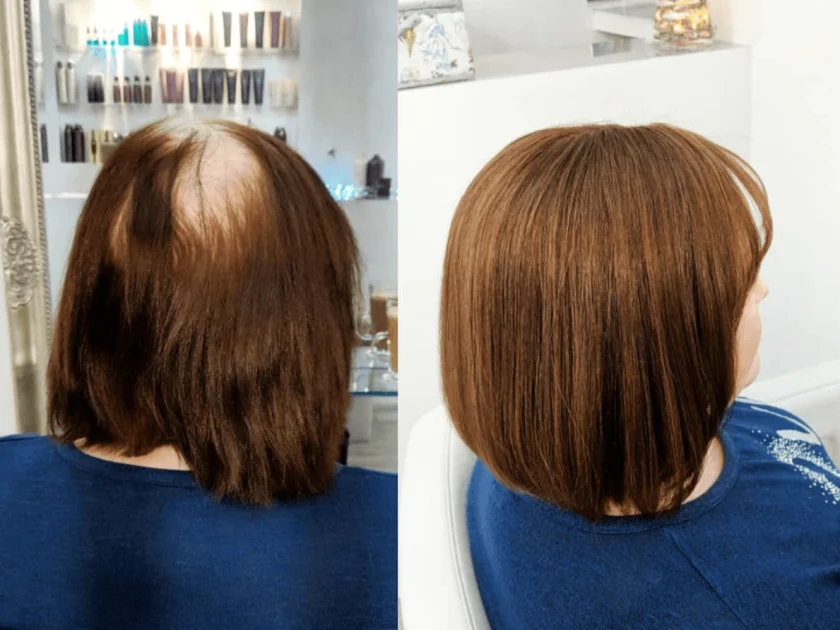
At The Hair Alchemist, we’ve worked with women across Yorkshire and beyond to find hair extensions that suit their natural style and colour, covering areas of thinning and bringing back their mojo! Here’s our guide to menopause and hair thinning.
Can Menopause Cause Thinning Hair?
While it isn’t the only possible cause of thinning hair, yes, menopause can cause thinning hair.
The NHS lists hair thinning or hair loss as a symptom of menopause and perimenopause, alongside other common symptoms like changes to periods, weight gain and skin changes.
Hair thinning or hair loss can also be caused by:
- Other illnesses
- Stress
- Female pattern baldness
- Weight loss
- Cancer treatment
Why Does Menopause Cause Hair Thinning?
When caused by menopause or perimenopause, hair thinning is a result of significant hormone changes.
According to Superdrug’s Online Doctor:
“A low production of oestrogen and progesterone, which are important for healthy hair follicles and hair growth, can cause hair to grow more slowly and to become thinner”.
Menopausal hair thinning can also be caused by:
- Your genes
- Aging
- Nutritional deficiencies
- Stress
- Lifestyle factors
- Thyroid issues
The exact cause of hair loss is hard to determine on your own, so always seek professional advice.
What Does Menopausal Hair Thinning Look Like?
Thinning hair doesn’t always look like highly noticeable bald patches. It can also take the form of:
- A widening parting
- Less volume around the crown of your hair
- A ponytail that feels thinner than it used to
- More visible scalp (easy to notice with dark hair)
- Hair that feels finer to the touch
- Increased shedding
For some women, the change is so gradual that it only becomes obvious by comparing photographs from years ago, or seeing a photograph of themselves from the back.
Can I Slow Or Manage Menopausal Hair Thinning?
There are no guaranteed solutions to stop or slow the thinning of your hair during menopause. There are, however, several steps you can take to take the best care of your hair.
Find Out The Cause
Once you start noticing hair loss, the best thing to do is find out the cause. Speak to your GP so they can assess your hair thinning and investigate possible causes. The sooner you find out the cause, the quicker you can begin medication (if applicable) or start looking into other solutions like hair extensions.
Seeking professional help is especially important if the thinning has begun or escalated quickly.
Look After Your Scalp And Hair
Whether you’ve already noticed thinning hair, or want to get ahead of it, looking after both your hair and your scalp properly gives your hair the best chance of looking its best.
If you’ve noticed hair thinning, try to limit the amount of heat you apply from straighteners, curlers or hairdryers. If you use any of these, make sure you apply a well-rated heat spray.
Avoid tight ponytails or buns that put significant tension in your hair too. Repeated pulling can contribute to traction alopecia, which is easily avoidable.
Taking good care of your hair means that your options are much more open when it comes to applying great-looking hair extensions.
Eat Well
It seems like most symptoms are greeted with the advice ‘eat a balanced diet’ but it’s true! Your hair needs a number of nutrients usually found in food to remain healthy. According to the International Society of Hair Restoration Surgery, these include:
- Biotin - found in eggs, liver, wheat, rice and dairy.
- Vitamin D - found in dairy, orange juice, fatty fish and mushrooms.
- Vitamin A - found in meats, fish, vegetables and cow’s milk.
- Vitamin C - found in citrus fruits, tomatoes, broccoli and strawberries.
- Vitamin E - found in avocados, almonds, fish and bell peppers.
- Folic Acid - found in leafy vegetables, fruits, nuts, beans, seafood and eggs.
- Iron - found in meat, fish, fruits, vegetables and grains.
- Magnesium - found in bananas, beans, soy products, seafood and dairy.
- Zinc - found in oysters, meat, eggs, nuts and dark chocolate.
While supplements help, the best way to get these vitamins is from natural food sources.
Can Hair Extensions Help With Menopausal Hair Thinning?
Yes! Hair extensions can be an ideal solution for women facing menopausal hair thinning.
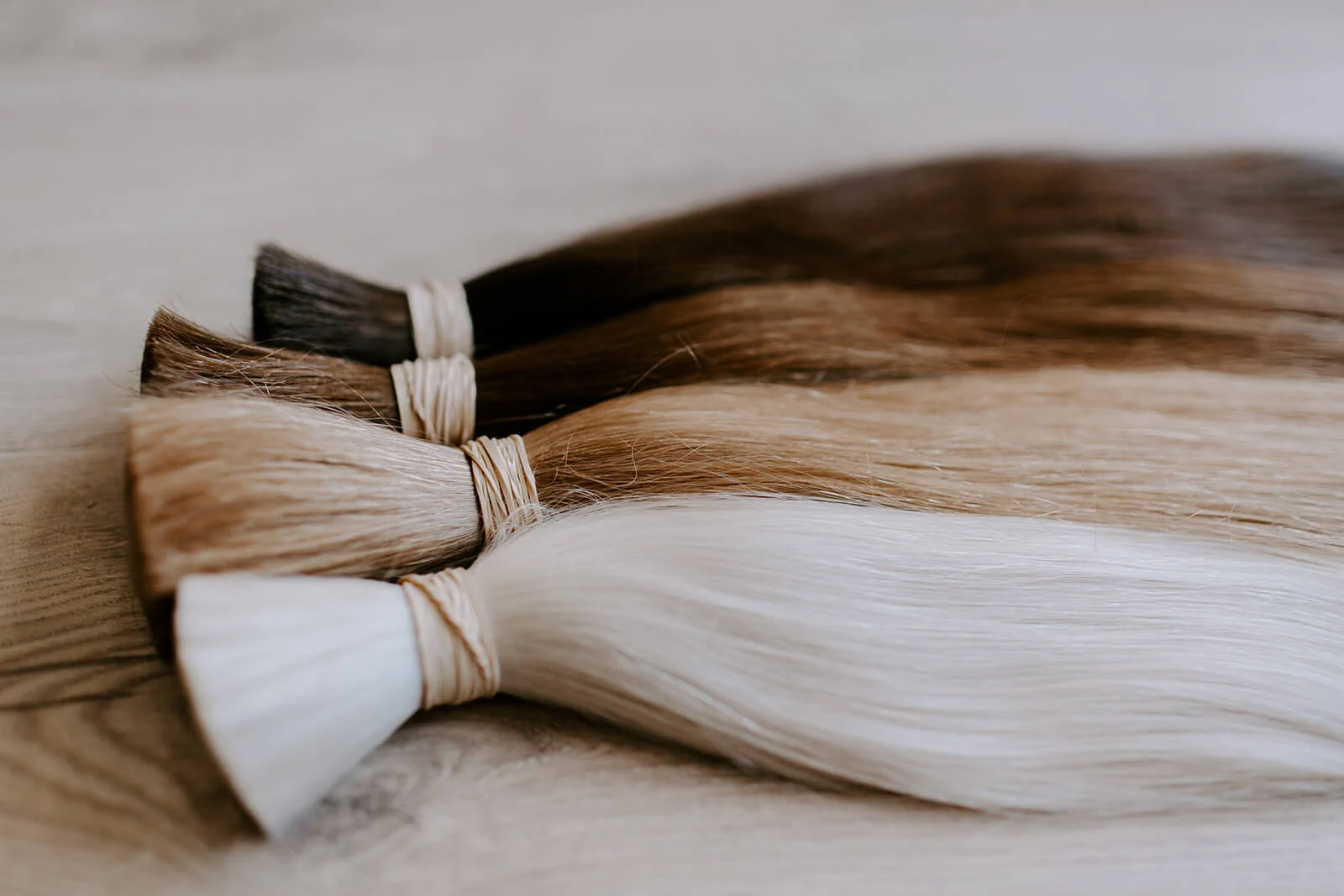
Let’s begin by being clear from the start about what hair extensions can and can’t do. Hair extensions aren’t a cure or treatment for hair thinning or hair loss. Instead, they work to improve the appearance of thinning hair by adding volume, length and fullness.
If you’re feeling self-conscious about changes in your hair, this can make a noticeable change in your confidence, and a confident woman always looks great! Wigs and hair extensions are also listed as an official treatment option for hair loss and hair thinning by the British Association of Dermatologists, so you don’t have to just take our word for it!
It’s important to remember that not every type of hair extension works for every type of hair. Extensions add weight and some tension to your hair, so the condition, density and strength of your hair need to be considered carefully.
That’s what we do here at The Hair Alchemist. We offer a free consultation, so we can find the ideal solution for your hair so you can achieve your dream look. We’ll only fit extensions that will work for your hair. 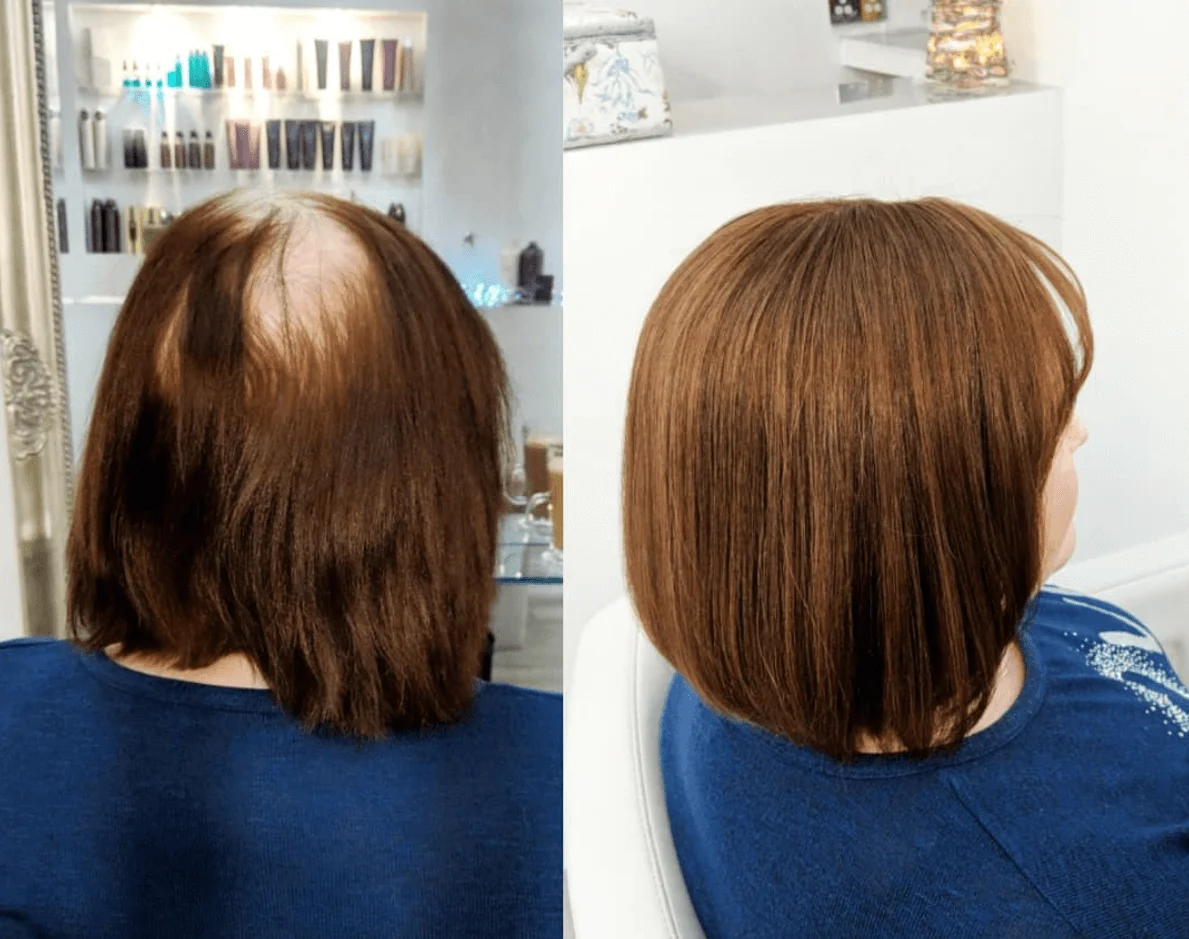
What Are The Best Menopausal Hair Thinning Extension Solutions?
One type of hair extensions may be perfect for one person, and a nightmare for another. That’s why we take the time to get to know your hair, the causes of your hair thinning and what your end goal is to ensure we get the best solution for you.
But which hair extensions are the best for menopausal hair thinning? We’ve covered this in more depth in our blog, What Are The Best Hair Extensions For Thinning Hair?. Here are our top recommendations if you’re interested in hair extensions for your thinning hair:
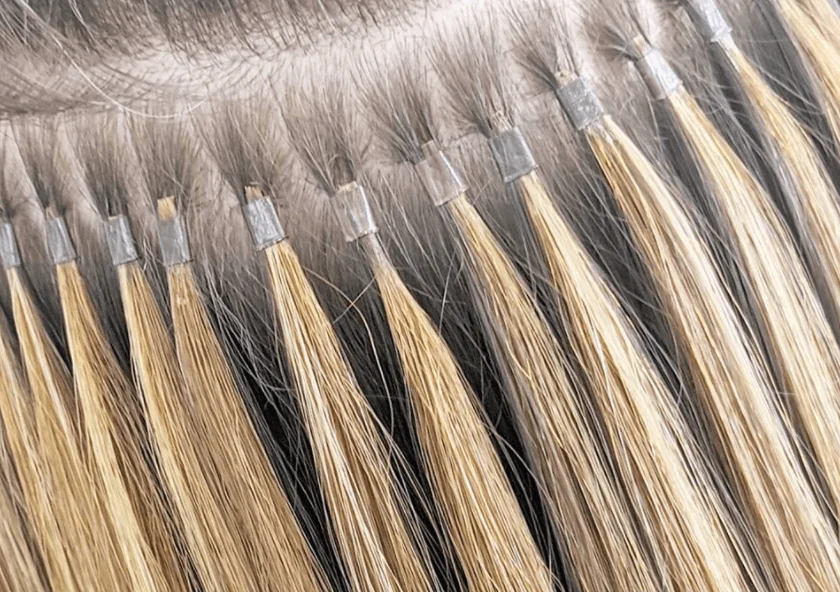
Micro Ring Hair Extensions
Also Known As: Micro beads, micro loops, or micro links.
How They Work: Small metal rings secure the extension to a section of your natural hair using a simple clamping technique.
Key Benefit: It is the gentlest attachment method available since it eliminates the need for glue, heat, or harsh chemicals.
Suitable For: Hair with early signs of thinning.
Not Suitable For: Very fine or fragile hair, hair with significant thinning.
Micro Ring hair extensions are available at The Hair Alchemist. Book a free consultation today!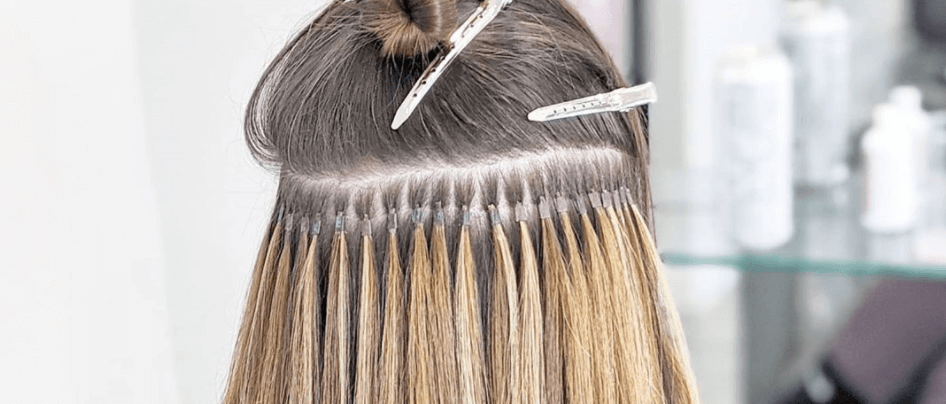
Miniature Micro Rings
Also Known As: Mini micro rings (a smaller, more discreet version of classic micro rings).
How They Work: Tiny metal loops thread through your natural hair and extension piece, then clamp shut to hold securely.
Key Benefit: As the smallest and most undetectable extensions available, they offer a safe, seamless blend-even on extremely fine hair.
Suitable For: Very fine hair, hair that has been thinning for some time.
Not Suitable For: Hair with significant thinning
Miniature Micro Ring hair extensions are available at The Hair Alchemist. Book a free consultation today!
Nano Ring Extensions
Also Known As: Nano rings or nano beads.
How They Work: Tiny metal rings thread through your natural hair and extension piece, then clamp shut without glue or adhesives.
Key Benefit: Being 90% smaller than classic micro rings makes them virtually invisible and lightweight, offering a highly discreet way to add length.
Suitable For: Adding length with a long-lasting, seamless finish.
Not Suitable For: Thinning or fragile hair, those looking for less maintenance, as they require more frequent upkeep than standard or mini micro rings.
Tape-In Extensions
Also Known As: Tape-ins or skin weft extensions.
How They Work: Thin, lightweight adhesive strips sandwich small sections of your natural hair near the scalp to create a flat, seamless hold.
Key Benefit: Quick to apply and reusable 3-4 times, they lie completely flat against the head to provide an undetectable finish with even volume distribution.
Suitable For: Anyone seeking a damage-free, semi-permanent extension method that requires less daily maintenance than micro rings.
Not Suitable For: Those looking for a fully permanent hair extension method.
Clip-In Extensions
Also Known As: Clip-ins or temporary hair wefts.
How They Work: Fabric or silicone-backed hair wefts feature small pressure-sensitive clips that snap securely into roots at the base of your natural hair.
Key Benefit: They offer instant, commitment-free volume and length without subjecting fragile hair to constant tension, heat, or chemicals.
Suitable For: Those with fine or thinning hair seeking a completely damage-free, temporary solution for special occasions or daily wear.
Not Suitable For: Anyone looking for permanent or semi-permanent hair extensions that remain in place for weeks at a time.
Clip-In hair extensions are available at The Hair Alchemist. Book a free consultation today!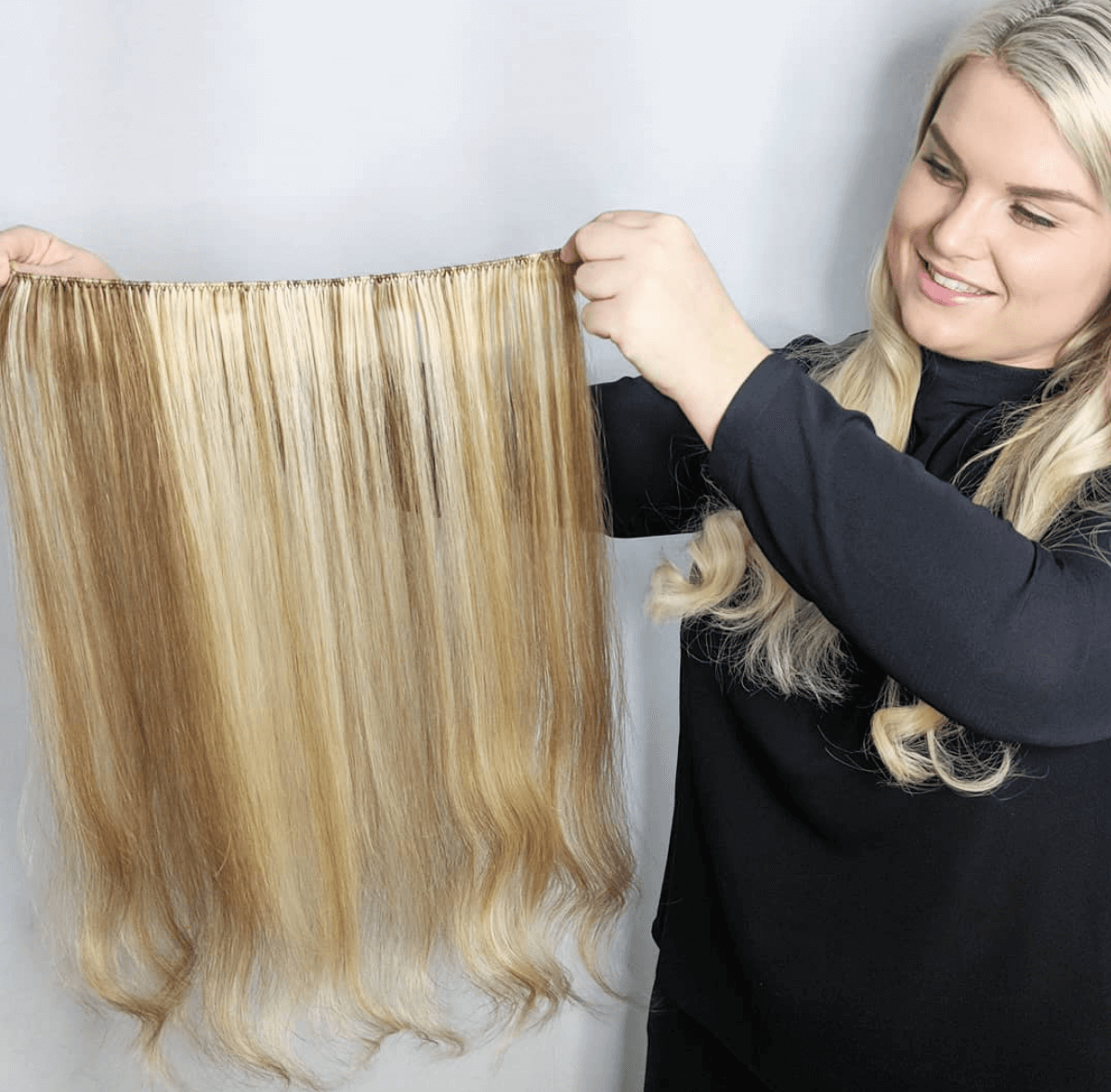
Tricholace™ Hair Replacement System
Also Known As: Hair replacement system.
How It Works: Its innovative, breathable membrane lets your scalp breathe freely while seamlessly concealing thinning hair.
Key Benefit: A full covering for thinning hair.
Suitable For: Anyone suffering from androgenetic alopecia, plantar fasciitis, alopecia areata, or other hair and scalp issues.
Not Suitable For:
Tricholace™ is available at The Hair Alchemist. Book a free consultation today!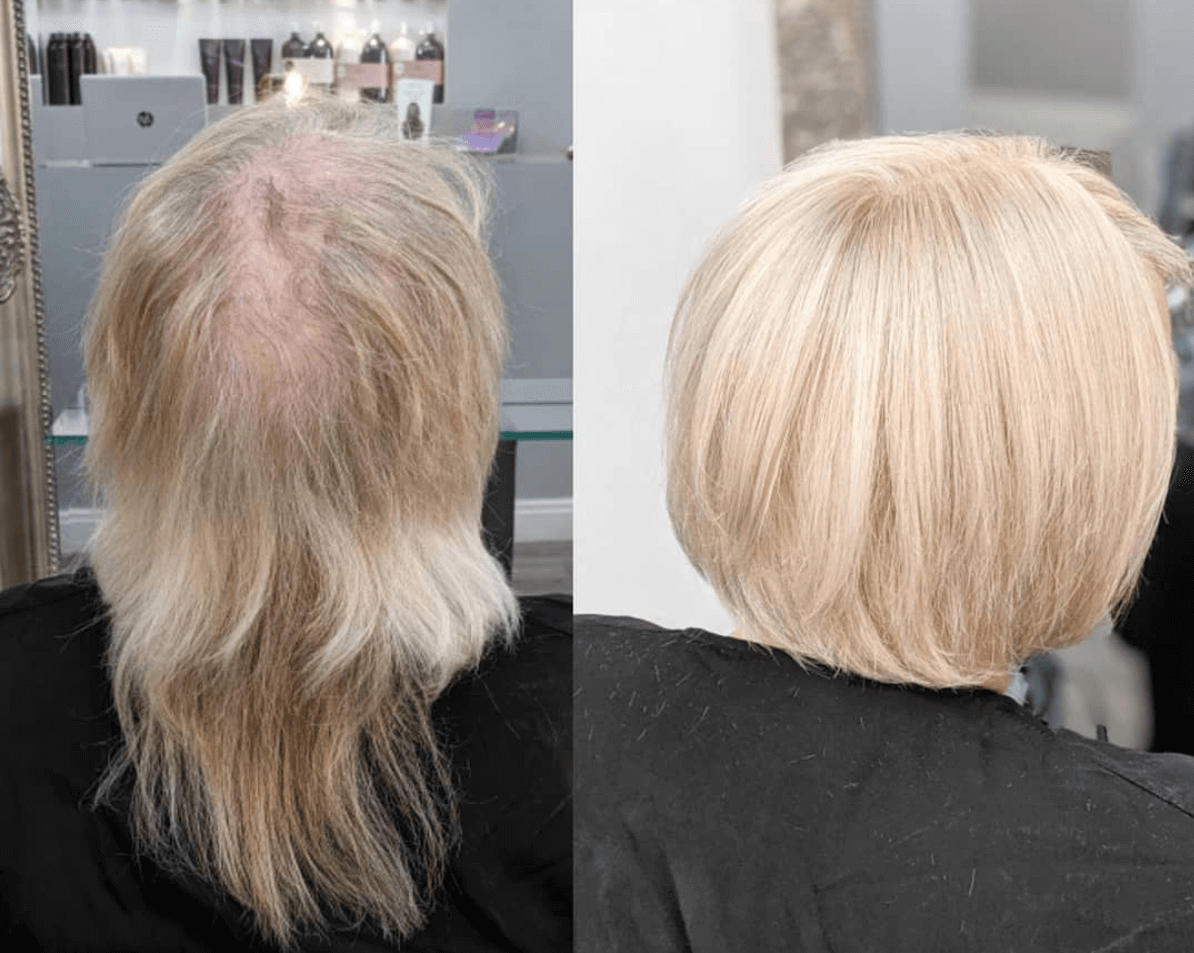
Choosing Menopausal Hair Thinning Extensions
If you’re considering hair extensions to boost the appearance of your hair following menopausal hair thinning, the solution you choose must be based on what’s best for your hair.
When you book a free consultation at The Hair Alchemist, we consider:
- The overall density of your hair
- Where the thinning is occurring
- The strength and condition of your natural hair
- The condition of your scalp
- How much weight your natural hair can safely support
- Your preferred hairstyle and level of maintenance
- Whether extensions or another hair solution would be more appropriate
From higher-maintenance solutions for Yorkshire locals to low-maintenance options for anyone further afield, anyone is welcome at our Harrogate salon. We’ve found innovative and effective solutions for women who have experienced menopausal hair thinning across the UK.
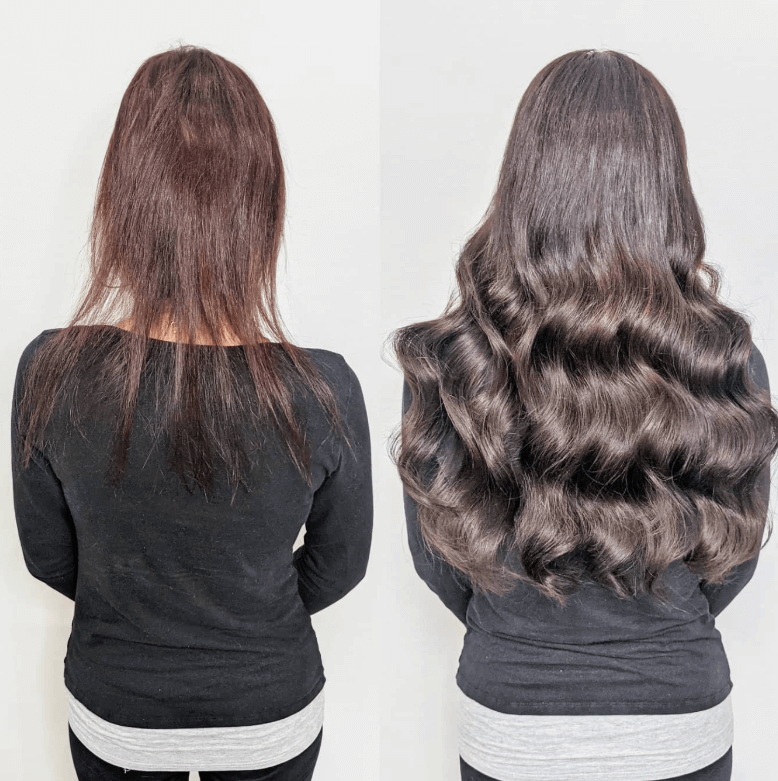
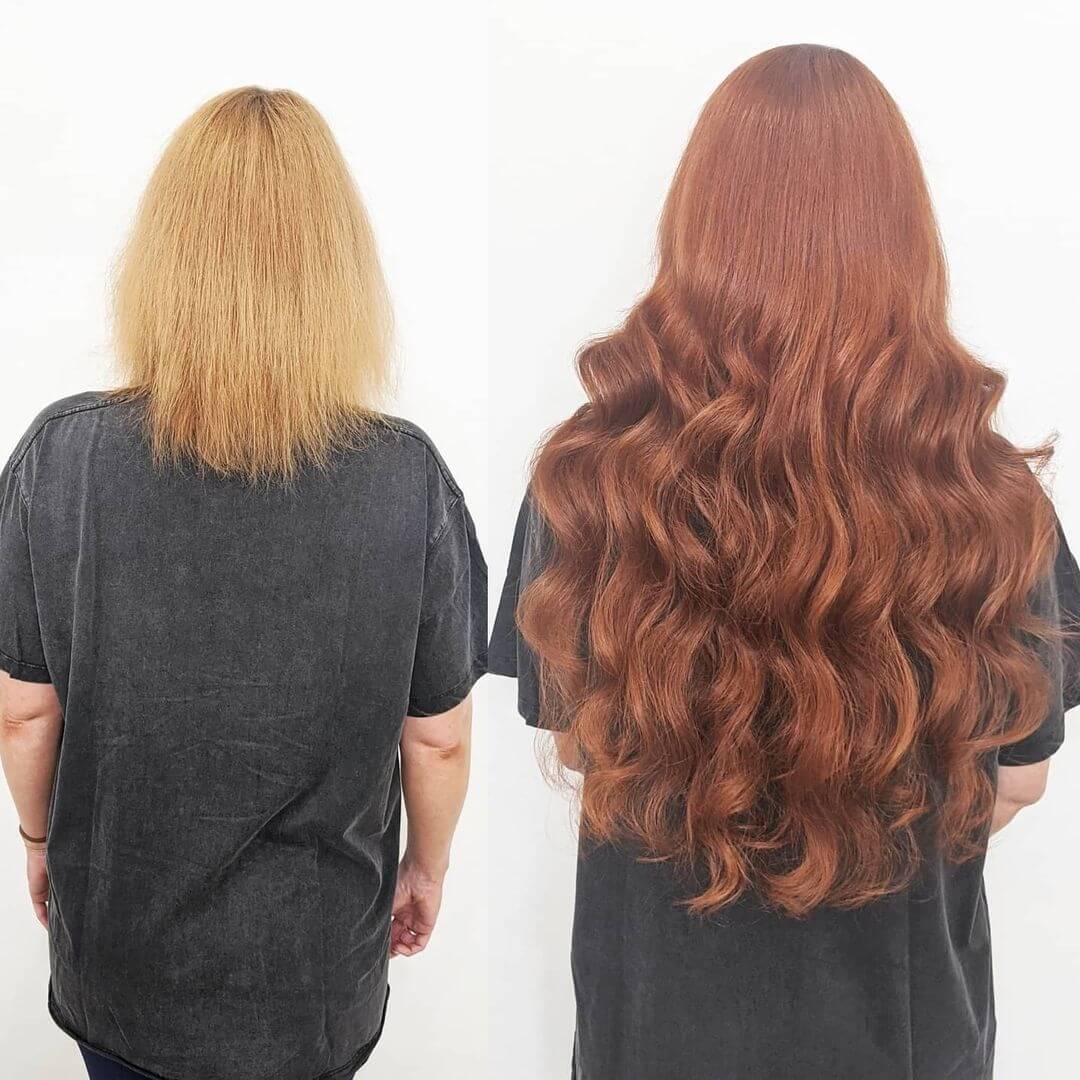
Extensions for Thinning Hair: Before and After
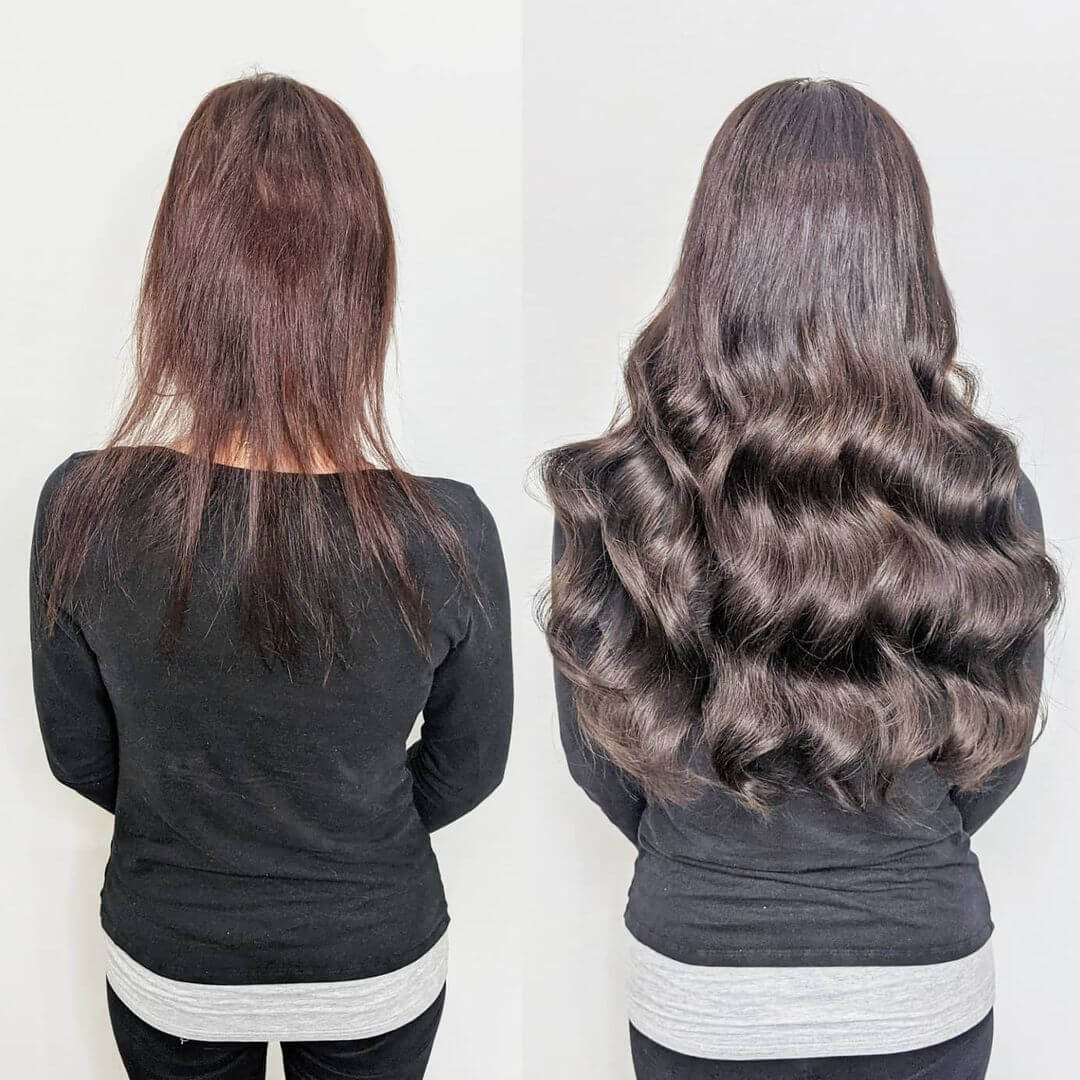
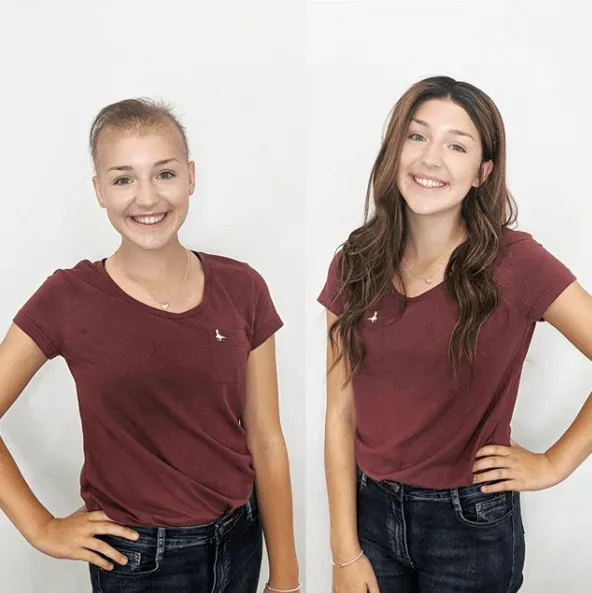
Menopause And Hair Thinning - FAQs
Can Hair Extensions Damage Thinning Hair?
Hair extensions can damage your hair, but only if they’re unsuitable, too heavy or fitted incorrectly. Hair extensions shouldn’t be viewed as a treatment for hair loss, and applying additional weight or tension to already fragile hair isn’t appropriate in every case.
This doesn’t mean you can’t have hair extensions if your hair is thinning. It means choosing the right method and having them fitted by someone who understands thinning hair is particularly important.
Read more in our article: Do Hair Extensions Damage Your Hair?
Can Hair Extensions Improve Confidence During Menopause?
Hair thinning isn’t simply a cosmetic issue; it becomes a real drain on self-esteem and body image. Hair extensions can’t reverse menopause-related hair loss, but they can help restore some of the volume, shape and fullness you’re missing. This helps boost confidence from day one.
For some women, that might mean being able to wear their favourite hairstyle again. For others, it could simply mean looking in the mirror and feeling more like themselves.
Should I Stop Wearing Hair Extensions If My Hair Is Thinning?
If your hair is thinning, it doesn’t necessarily mean you need to stop wearing any existing hair extensions. You may, however, need to change the type you use. Even if you’re already using hair extensions, you can contact us today to discuss your options if your hair’s been changing.
Why Choose The Hair Alchemist For Hair Extensions?
At The Hair Alchemist, we’re not just a hair salon that offers extensions. We are a hair extension specialist, with processes created for maximum customer satisfaction. As well as a free consultation, we also offer care advice, maintenance and aftercare appointments, and a personalised experience from start to finish.
Based in Harrogate, we have customers travelling from all over the UK for high-quality extensions and excellent customer service.
Do I Need To Have Long Hair To Have Hair Extensions?
No! Hair extensions don’t have to extend the length; they can simply extend the thickness and volume. So if you prefer a shorter style, you can still choose a hair extension solution that works.
The minimum length we require your hair to be, in order to attach extensions effectively, is 6 inches. You can read more about hair extensions and short hair here: How Do You Hide Extensions in Very Short Hair?

The Hair Alchemist
Award-winning hair extension specialist, Harrogate